| ||||||||
 Visit NYTTS on Facebook.
  Join
Meetings
Seminars
Annual Shows
Join
Meetings
Seminars
Annual Shows
 Links
Care/Veterinarians
In Memoriam
Links
Care/Veterinarians
In Memoriam |
Next NYTTS Event

Prime Produce Announces
the 2026 Charity Turtle Races
Saturday, July 11, 11:00 a.m.–4:00 p.m.
Prime Produce, 464 West 54th Street, Manhattan
See slide show of 2025 event

An NYTTS Pick from the Past
Cartoonist Interview by NYTTS member Lory Lazarus From the Plastron Papers, September 1988 View article |
 |
www.straypride.org/ — The website for adoptions and surrenders Dogs, cats. and turtles (including Red-eared Sllders) accepted! Contact: Strayprideanimalrescue@gmail.com |
Introducing Turtles of North America, a documentary series by Ari Taub
The first of the series, The Spotted Turtles of New England, was premiered at our NYTTS meeting on February 23, 2025.
See a slide show of photos taken at the meeting. The second film of the series, The Quiet Battle to Save the Blanding’s
Turtle of New York, was premiered at our Annual Seminar on November 9, 2025.

Here is the latest issue of Turtle Survival magazine, featuring powerful stories of resilience—including “Tortoises in the Storm,” which highlights the extraordinary courage of our team and community partners in Madagascar as they saved thousands of tortoises during unprecedented flooding. As threats from wildlife trafficking, habitat destruction, and climate-driven disasters continue to rise, your commitment and trust in Turtle Survival Alliance are more important than ever.
About the Cover: First described to science 60 years ago, the Narrow-bridged Mud Turtle (Kinosternon angustipons), like many Central American species, remains poorly understood. Almost nothing is known about its wild populations. A recently initiated focus on Central America by the Turtle Survival Alliance and our partners aims to learn more about this and other species so that targeted conservation actions can be developed. Photo: Rio Dante Para
The “flip-page” version of this document is considerably easier to navigate that previous applications of similar software. The zooming feature at the bottom of the screen plus easier repositioning of text and images with the curser permit a more accessible read.
| Bob Zappalorti’s Book — The Bog Turtle, and ARC’s Bog Turtle Program | |||||
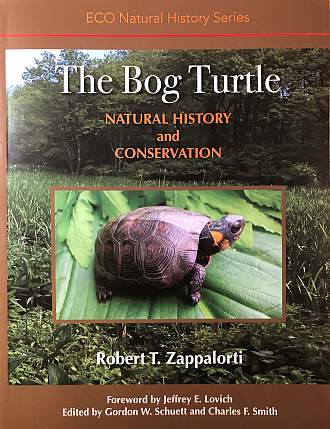 This book provides in-depth natural history information on Bog Turtles, including their taxonomic background, survival tactics, predators, reproductive biology, foraging habits and diet, habitat preferences, hibernation stategies, and conservation. Zappalorti will take you on a step-by-step journey to explore the life of this small and interesting turtle. Welcome to the secret world of the Bog Turtle.
The Bog Turtle is available in paperback for $29.95, or for the limited-edition leather-bound copy for $79.95. To order, Click here. |
|
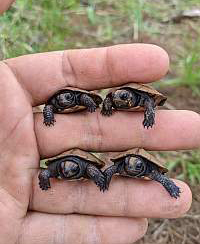 Photo © José Garrido |
|
Today, the Bog Turtle is in grave danger. Loss of habitat and demand for the pet trade represent severe threats. See the Amphibian and Reptile Conservancy’s program on the southern population of Bog Turtles, Small Turtles, Big Future... |
|
“This generation isn’t going to want to preserve the environment if
they haven’t been a part of it. You only value and protect what you love.”
J.J. Apodaca, the Executive Director of ARC, presents “Protecting What We Love.”
View the ARC blog at https://arcprotects.org/blog/ and sign up for their newsletter at the bottom of the page.
|
The Last Female Giant Yangtze Softshell Turtle Dies.
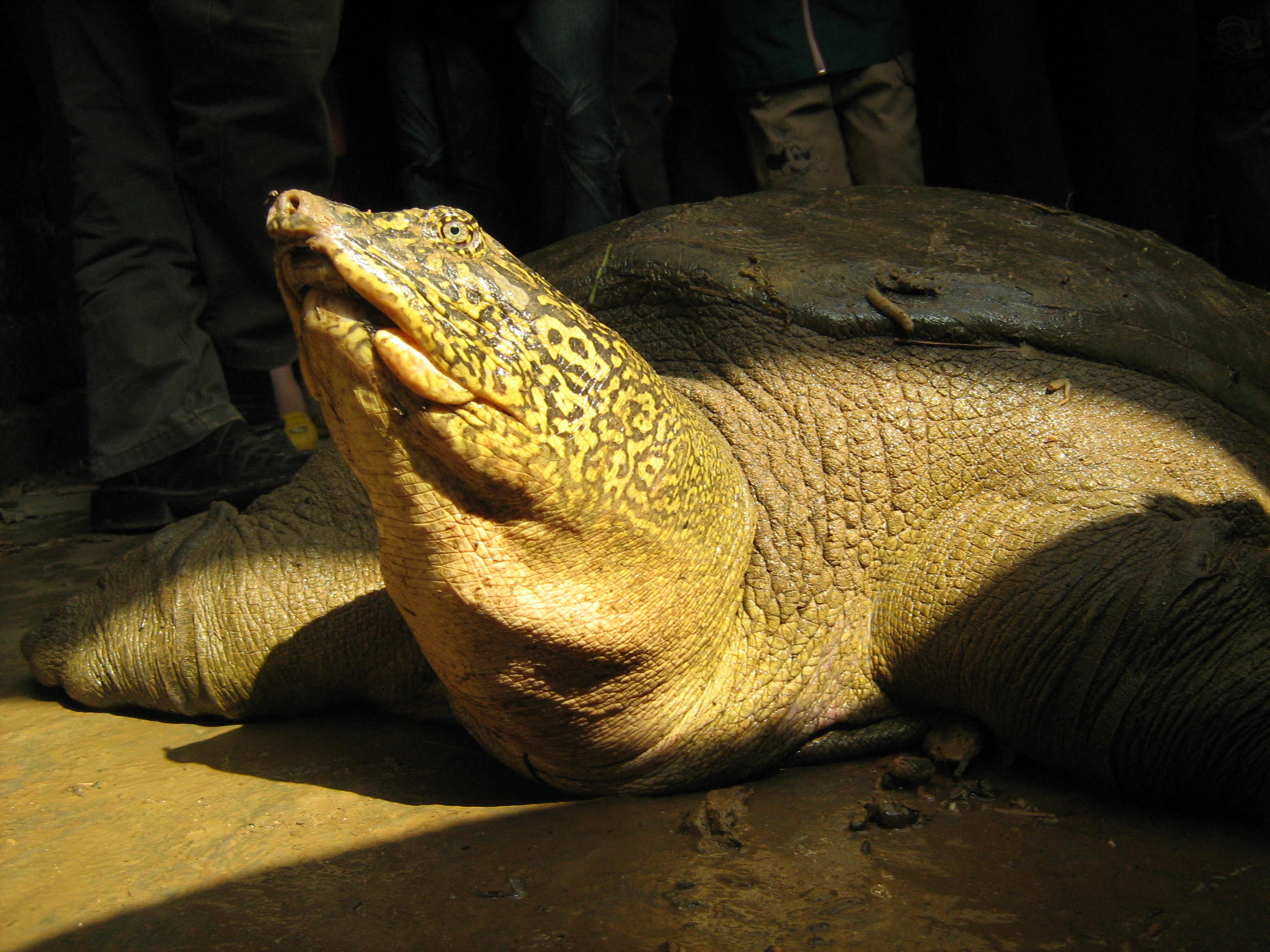 Over the past decade we have followed the Giant Yangtze Softshell Turtle in Hoàn Kiêm Lake in Hanoi and the nearly tireless efforts by turtle biologists to breed the remaining three individuals. At the 2017 NYTTS Annual Seminar, Wildlife Conservation Society Chief Veterinarian Paul Calle presented his Yangtze Giant Softshell Turtle (Rafetus swinhoei) Reproduction Update. Now that the last remaining female has died, the species is on the brink of extinction unless another female can be found.
 See the Time magazine article “An Extremely Rare, Revered Reptile Is on the Brink of Extinction After Last Female Dies”. |
In this video we’re going to explore some of that history, to see what makes these animals so special.
The New York State Department of Environmental Conservation now has a 24-hour tips line to report violations of protected species regulations. It is prohibited to sell any New York State species of reptiles and amphibians. If you see any New York species for sale in pet shops or markets, please call 1-800-847-7332. Report the name and address of the business, and the animals you observed for sale.
Turtle Care Video from the Mid-Atlantic Turtle & Tortoise Society
NYTTS Red-eared Slider Adoption Policy
Unfortunately, we no longer have local homes for these turtles because of the high numbers that have come to us in recent years. We sometimes have members with ponds who may offer to take in displaced sliders. We do not accept postings by individuals for adoptions of any species. All adoptions are handled through official NYTTS channels, and notices will be emailed to members at the discretion of our Board. Those members wishing to place turtles or to be considered as prospective adopters of sliders and other species should email QandA@nytts.org with their contact information and the species they are interested in placing or adopting. Photos of their turtle/tortoise habitats and accommodations should be provided. Photos of turtles to be placed should also be provided.
For more information on the status of red-eared sliders, see Sliders, Siders, Everywhere.
 |
|
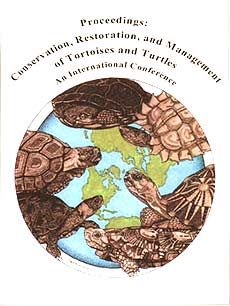
Proceedings: Conservation, Restoration, and Management of Tortoises and Turtles — An International Conferenc Published by the New York Turtle and Tortoise Society, 1997, xxiv + 494 pages, 8½” × 11", softcover, 94 black-and-white and 14 color photos. Peer-reviewed and updated papers from the July 1993 Purchase, New York, conference.
“This volume is a goldmine of information on the population status, dynamics, and conservation prospects of the tortoises and turtles of the world.” — Peter C. H. PritchardSee volume description with abstracts. |
The Asian Turtle Crisis: An Update — Two videos taken 13 years apart show that little changed in the markets in Guangzhou, China, from 1997 to 2009. Compare the videos.
Clarifying Regulations in New York State for all Native Species: The New York State Department of Environmental Conservation now requires a permit to keep any species of reptile and amphibian native to New York State. This includes all twelve species of New York turtles. The mechanism by which owners of New York turtles may acquire permits is being investigated. Read and download an overview of the new regulations.
| We gratefully acknowledge our contributors! We heartily thank the many who contributed in 2024 as well as those throughout the pandemic. Donors in 2025: | |||||
|
Faye Adcock Jerry Allen Bertha Babineau Judith Barber Susan Barber David Bartels David Basnight April Boyett John Braham Shirley Braun Kevin Brenner Toni Breton Norman Brown Donna Nussinow Burns Christina Bush Matthew Butterworth Michelle Canion Robert Chamberland The Clamor Band Andrea Clark ' Dennis Colvin Patrick Cornelius Diana Corona Paula Cox Helen Day Johnny Endique Vern Evans Lesley Fagen* Tawana Fields Virginia Fields Bruce Fitting Kimberly Folds Richard Franklin |
|
Michal-Lynn Gramby Anna Gonoshilova Michal-Lynn Gramby Anne Harper Donald Hashman Andrea Hartford Vera Harwilchuk Keith Henderson Patrick Hill Russell Holmgren Jerone Hsu Jim Hulings Josephine Ilarraza Mortimer Keane Seth Keslow Rebecca Kreinen Jody Kuh Katie Kuntzelman Lauren Kurtz Tess Lampert David Lopez Kathleen Mazzone Regina McCarthy* Nathan Mcewen Linda Mead Catherine Mitchell Tony Monahan Alex Morales Donal Murph Julia Nichols Thomas Nunez Ivan Ocegueda Romina Pascual Gregory J Penfield |
|
Kevin Pollack Amy Pruneda Delbra Rainey Catherine Recchio Cori-Ann Roublick* Charles A. Roult Katherine Rumpler Richard Sanders Joseph Scalisi Donna Schulman Robert Seaver Ibrahim Sesay Yevgeniy Sheynkman Rebecca Show-Heartlove Brian Shrum Michael Simpson Joseph John Skolnik, Jr. and Masako Tanaka Steven Snyder David Spreadbury Shawna Stephens Don Stratz Douglas Trainor Patricia Tsutsumi Donely Sykes Ari Taub Rhonda Thomas Mary Ting Patricia Tsutsumi Candy Walls Hiram Williams Adia Willingham Wayne Writesel |
|
* Indicates recurring donations, a special thank you to Lesley Fagen, Regina McCarthy, and Cori-Ann Roublick for their recurring donations! | |||||
|
Membership
Membership in the New York Turtle and Tortoise Society is open to all interested persons for an annual fee of $25. Your membership helps support the Society’s activities and programs, including Rescue/Rehab and Public Education, as well as meetings and lectures. Please click the Donate button below to go to our secure page at PayPal and specify “New Member” on the PayPal form. If you are renewing your membership, click the Donate button and specify “Renewing Membership” on the Paypal form. Donations to the New York Turtle and Tortoise Society are tax deductible and can be made online with your credit card by clicking the Donate button, or by sending a check payable to NYTTS, to NYTTS Donations, 15 Oakwood Avenue, Fl. 1, White Plains, NY 10605.NYTTS Mailing List. If you wish to be added or removed from our mailing list, please write jvanabbema@nytts.org.
Prime Produce is a not-for-profit 501(c)3 community service organization located in Manhattan. We are very pleased they are now hosting our meetings. The venue is a fully equipped theatrical workshop space, which is ideal for our presentations. Visit their website to learn more about Prime Produce. |