
The New York Turtle and Tortoise Society presents
Seminar 2026
Saturday, November 14, 2026
Check-in 9:30 a.m.; Sessions 10:00 a.m.–5:00 p.m.
Beczak Environmental Education Center
35 Alexander Street, Yonkers, New York 10701
|

Approach from the north on Alexander Street
to the Beczak Environmental Education Center
|
Seminar 2026 will be held at the Beczak Environmental Education Center in Yonkers, New York — an easy drive up from the city or down from points in Westchester County and north with ample parking is available.
See Driving Directions to Beczak (PDF). Or see Alternative Directions (PDF). It is also just two blocks north of the Yonkers Metro North (Hudson River Line) station (see map and train schedules (PDF)).
The full-day event featured three in-depth presentations by prominent herpetologists and researchers. The fee for the day, including morning coffee and lunch, is $75 per person ($25 for students with ID).
There are two ways to register:
- Register by mail with check or money order. Download, print, and complete the 2026 Mail-in Registration Form (PDF document) and send in no later than Saturday, November 7.
- Register online by credit or debit card through PayPal (you do not need a PayPal account). Online Registration deadline is Wednesday, November 12. Go to the online Registration Form.
|
Scheduled Program
“Repatriation of Eastern Box Turtles onto State Land in New Jersey”
Brian Zarate
Biologist, NJDEP Fish and Wildlife,
Endangered and Nongame Species Program
|
|
Dr. Patrick Connelly
State Wildlife Pathologist, NJDEP Fish and Wildlife,
Office of Fish and Wildlife Health and Forensics
|
Brian Zarate
|
|
|
Dr. Patrick Connelly |
|
The illegal take and trade in North American turtles represent persistent threats and challenges for natural resource managers. In New Jersey, the state wildlife agency and conservation partners are holding an increasing number of native turtles seized by wildlife law enforcement or surrendered pets from permitted and unpermitted parties. As a state highly fragmented by development, many local, wild turtle populations are isolated and functionally extirpated. The large number of native, captive turtles in New Jersey may offer opportunities to augment depleted, wild populations or re-establish extirpated areas. NJDEP Fish and Wildlife initiated a pilot release of Eastern Box Turtles (Terrapene carolina carolina) in 2024 to gain experience in implementation of a repatriation effort. The turtles were released onto a tract of state-protected land in August 2024 with each turtle affixed with a radio-transmitter. We report on our decision-making process and justifications for release, health profiles of turtles pre- and post-release, their movements and use of habitats, and survivorship through the present.
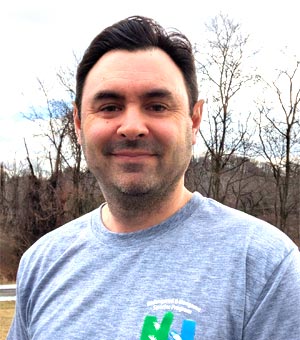
Brian Zarate is a Supervising Biologist with the New Jersey DEP Fish and Wildlife, Endangered and Nongame Species Program. He first started his career as a seasonal employee in 2001. He coordinates the state's reptile and amphibian conservation efforts and co-leads a statewide wildlife initiative called Connecting Habitat Across New Jersey (CHANJ). His early focus was on inventorying vernal pools across the state when these unique wetlands first received regulator height=y protection. Much of his current species work revolves around local, regional, and national conservation of the some of most imperiled turtle species: the Bog Turtle, Wood Turtle, Spotted Turtle, Box Turtle, and Northern Diamond-backed Terrapin. Brian sits on a number of committees and boards to provide technical guidance and expertise and has greatly benefited from serving in a number of leadership roles for Partners in Amphibian and Reptile Conservation (PARC).
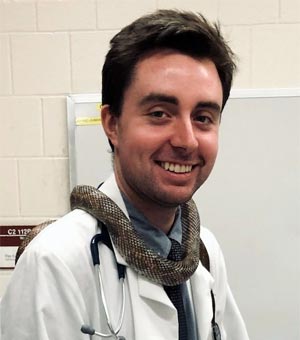
Dr. Patrick Connelly is the wildlife veterinarian with New Jersey DEP Fish and Wildlife, Office of Fish and Wildlife Health and Forensics. He coordinates statewide surveillance for wildlife diseases of concern, oversees response for wildlife mortality events, provides forensic services in collaboration with law enforcement, and performs diagnostic testing to monitor wildlife health across New Jersey. Much of his work focuses on diseases that can have tangible population-level impacts or are at the nexus of free-ranging wildlife, domestic animals, and human health. He has particular interest in the health and conservation of reptiles and amphibians.
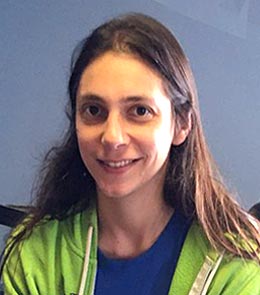
Angelina Carnevale |
Angelina Carnevale
Licensed turtle rehabber and founder of Turtle Haven
“Turtle Rehabilitation”
Learn what goes into saving the lives of our shelled friends when they get hit by cars or are found otherwise in distress, with licensed wildlife rehabilitator Angelina Carnevale from Turtle Haven in Connecticut. What goes on in wildlife rehab can be indicators of what's happening in the environment, providing clues about new and worsening threats turtles face. Rehabbers are on the front lines of conservation and can be valuable allies and sources of data to anyone studying turtles in the field or advocating for their protection.
Angelina Carnevale is a lifelong turtle lover who has kept pet turtles for 20+ years, volunteered for sea turtle conservation projects, and finally turned her love for helping turtles into being a licensed turtle rehabber and founding the non-profit group Turtle Haven in 2019. She is dedicated to helping conserve Connecticut's native turtles through rehabilitation, education, and advocacy.
Patrick Delisle
Conservation researcher for The Wetland Trust in New York
and PhD candidate at Texas A&M–Corpus Christi
“Natural History of the Alligator Snapping Turtle”
The Alligator Snapping Turtle (Macrochelys temminckii) is the largest freshwater turtle in North America, yet much of its behavior in the wild remains poorly dcumented. A long-lived, slow-maturing ambush predator of southeastern rivers and bayous, the species was heavily depleted by commercial harvest in the twentieth century and remains a conservation concern across its range. This talk gives an overview of its natural history, including diet, habitat use, nesting, and the life history traits that make populations slow to recover. I will then present current research from researchers across the range, including highlights from my own thesis.
Patrick Delisle graduated from Westfield State University in 2019 with a BS in Biology. Since then he has studied the spatial ecology of threatened and endangered turtles across the country. His fieldwork has taken him to the flooded prairies of Illinois and Ohio, the Mojave Desert, the bogs and swamps of Western Massachusetts, the boundary waters of northern Minnesota, restored wetlands in eastern Texas, the barrier islands of Louisiana, and the bayous and rivers of southern Mississippi. In 2025 he earned his MS in Biological Sciences from the University of Southern Mississippi, where his thesis examined the spatial behavior and population size of a remnant Alligator Snapping Turtle population that had escaped historical commercial harvest. Patrick currently works with The Wetland Trust on conservation projects for various herpetofauna in New York, and in January he will become a PhD candidate studying Texas Terrapins at Texas A&M–Corpus Christi. |
|
|
|